Silvervine is a climbing plant from East Asia whose dried fruit galls and wood can trigger the same rolling, rubbing reaction in cats as catnip, and often in more of them. In a 2017 study of 100 domestic cats, almost 80% responded to silvervine, compared with about two in three for catnip, and nearly three in four of the cats that ignored catnip still reacted to silvervine. A set of four silvervine chew sticks costs $12.49 (price checked November 15, 2026) at Kitty Kick Stix.
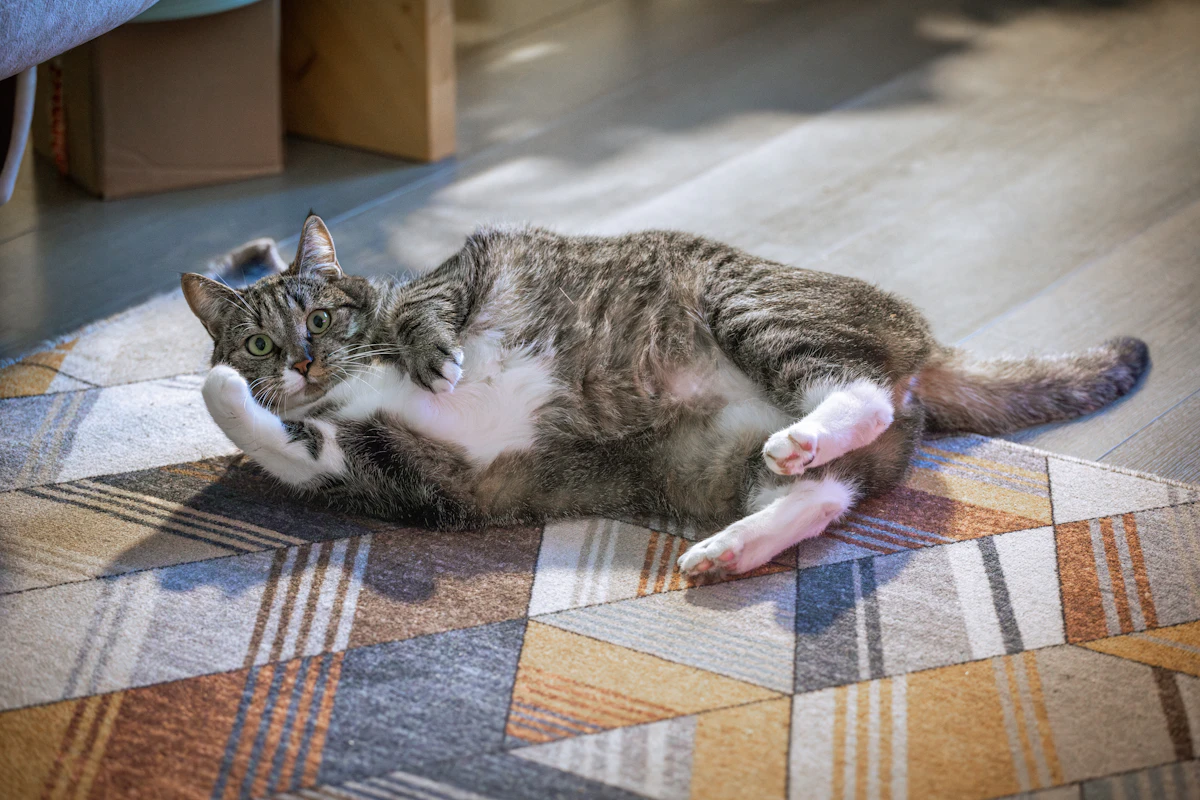
A cat rolling and playing, the kind of reaction catnip and silvervine can trigger. Illustrative photo. Photo: Tatyana Rubleva / Unsplash. Source and license.
The quick answer
| Silvervine | Catnip | |
|---|---|---|
| Plant | Actinidia polygama, a vine related to kiwifruit | Nepeta cataria, a mint |
| Cats that responded in the 2017 study | Almost 80% | About 2 in 3 |
| Main active compound | Nepetalactol, plus several related compounds | Nepetalactone |
| Best form | Powder from dried fruit galls; sticks for chewing | Dried leaves, spray, stuffed toys |
What the research found
The study most people cite was published in BMC Veterinary Research in 2017 by Sebastiaan Bol and colleagues. They offered catnip, silvervine, Tatarian honeysuckle and valerian root to 100 domestic cats. In line with earlier studies, one in three cats did not respond to catnip. Almost 80% responded to silvervine, and about half to honeysuckle and valerian.
Two details matter if you are shopping. First, cats responded mostly to the fruit galls of the silvervine plant, while some also responded to its wood, the part that chew sticks are made from. So a cat that shrugs at a stick may still react to silvervine powder. Second, the chemistry differs: the study found nepetalactone highest in catnip and only at marginal levels in the other plants, while silvervine had the highest levels of the other compounds tested. That is why silvervine can work on cats that catnip does not.
A 2021 study in Science Advances by Reiko Uenoyama and colleagues identified nepetalactol as the main component of silvervine behind the reaction. It found that the compound raised cats' β-endorphin levels and that rubbing transferred it onto their faces and heads, where it repelled a species of mosquito. That is an interesting explanation for the behavior, not a reason to use silvervine as a mosquito repellent for your cat.
Is silvervine safe for cats?
We did not find a veterinary source that lists silvervine as toxic to cats. The practical risks are the ones that come with any chew toy. The Cornell Feline Health Center advises avoiding toys with small pieces or string-like parts that can separate, especially when chewed, and be swallowed. Silvervine sticks are wood, and some are sold with raffia or sisal rope, so:
- Give the stick while you are around, at least the first few times.
- Throw it away once it splinters or the rope starts to fray.
- Offer it for short sessions and put it away afterwards. Many cats lose interest if the scent is always there.
- Ask your veterinarian first if your cat is pregnant, elderly or has a health condition, or if you notice vomiting or unusual behavior after use.
Kitty Kick Stix's own listing makes claims about stress and dental benefits. We do not repeat them: the studies above did not test them, and a stick is not a substitute for dental care from your vet.
Kitty Kick Stix Silvervine Sticks, set of 4: $12.49 (price checked November 15, 2026)

The store describes them as natural silvervine sticks with raffia, sisal rope and silvervine fruit gall. When we checked on November 15, 2026, the set of four was in stock and the set of two ($7.29 (price checked November 15, 2026)) was sold out. Packaging may vary, the listing says.
Skip it if your cat is a heavy chewer that breaks wood into pieces. Silvervine powder sprinkled on a toy or scratcher avoids that problem.
If your cat does like catnip
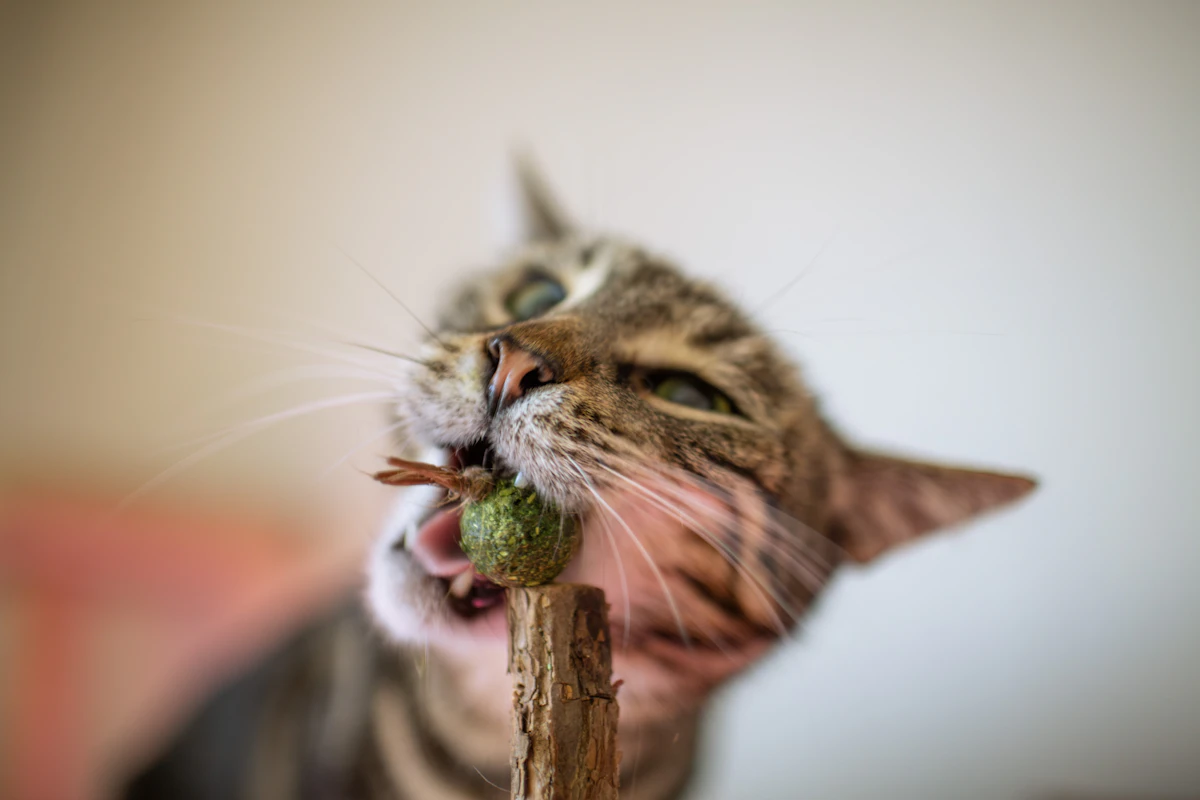
A cat chewing catnip. Illustrative photo. Photo: Tatyana Rubleva / Unsplash. Source and license.
About two in three cats do, so catnip is still worth a try. Kitty Kick Stix is best known for long catnip kicker toys that a cat can hug and bunny-kick:

- Classic 15-inch kicker, $10.99 (price checked November 15, 2026). Check the classic kicker
- Catnip fish kicker, from $6.95 (price checked November 15, 2026). Check the fish kicker
- Premium catnip spray, $8.79 (price checked November 15, 2026), to refresh an old toy or a scratcher. Check the catnip spray

Our advice: if you do not know whether your cat responds to either plant, buy the cheapest catnip item first. If nothing happens, try silvervine.
Buying from Kitty Kick Stix
The store offered free shipping on orders over $39 when we checked its terms on November 14, 2026, and it does not accept returns except for manufacturing defects. It also notes that not every cat reacts to catnip, which matches the research. For more on what cats should and should not eat, see our sister site's article on cat nutrition myths, and for recent cat health news, our report on the FDA safety update for Solensia.
Why we feature Kitty Kick Stix
We earn a commission when you buy through the links on this page. We have not tested these products. Product images: Kitty Kick Stix. Prices and stock are what the store showed on November 15, 2026, and the price labels on this page hide themselves when they get old.
Sources & further reading
- BMC Veterinary Research — Bol et al. (2017), Responsiveness of cats to silver vine, Tatarian honeysuckle, valerian and catnip.
- PubMed — Uenoyama et al. (2021), The characteristic response of domestic cats to plant iridoids allows them to gain chemical defense against mosquitoes.
- Cornell Feline Health Center — Safe toys and gifts: small pieces and string-like parts.
- Kitty Kick Stix — Silvervine Sticks (Multi Pack) product page, read November 15, 2026.
- Google search data for the terms.