Screwworm Cases Climb Fast in Texas, New Mexico and Arizona, Including Dogs
TEXAS, NEW MEXICO AND ARIZONA — USDA figures as of November 13, 2026.
Confirmed New World screwworm infestations in U.S. animals are rising quickly this fall. The USDA's public dashboard lists 44 domestic animal cases confirmed so far in November, after 33 in all of October and just three in September. Cattle make up most cases, but dogs and horses are among the animals affected.
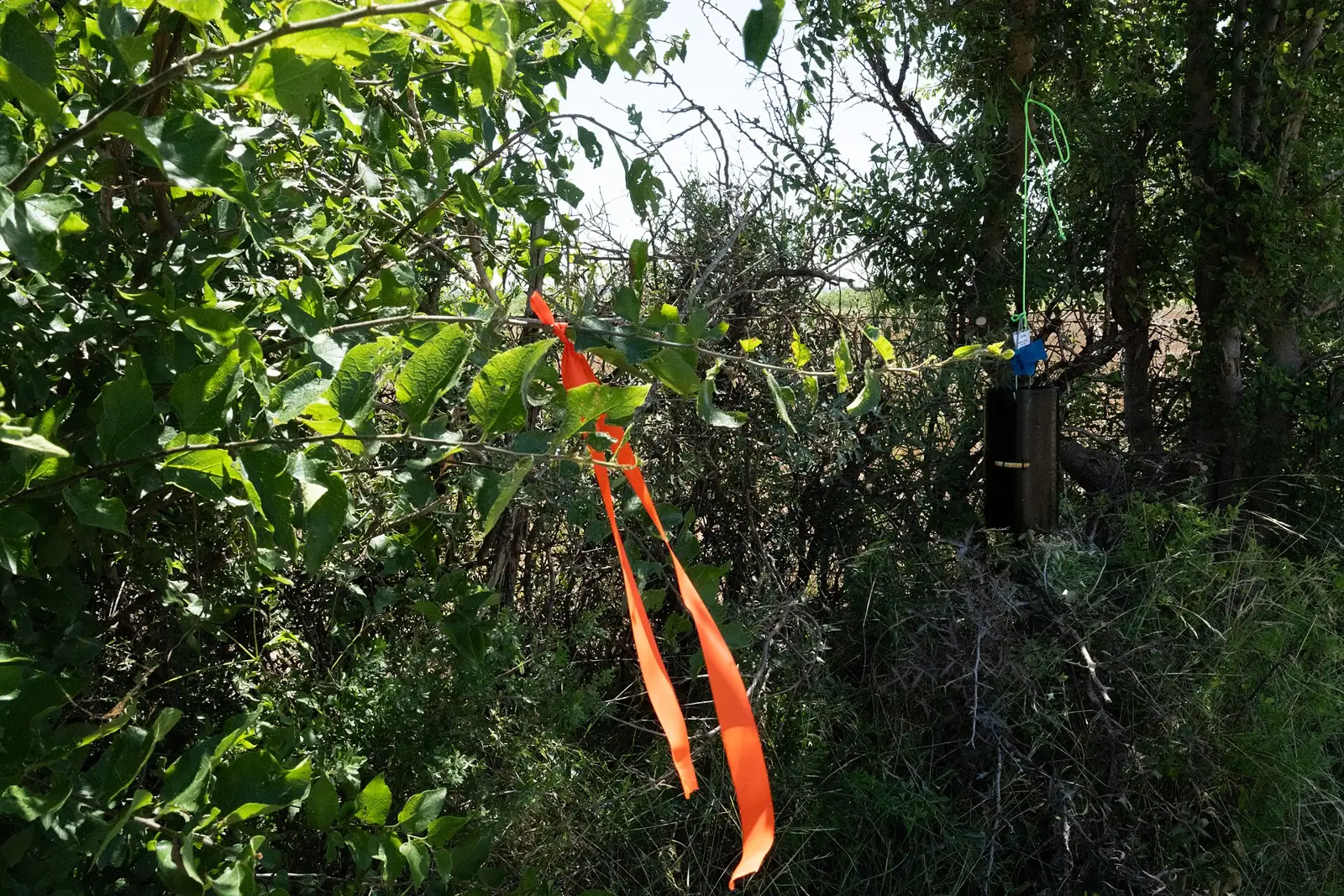
A baited trap set by a USDA strike team to detect wild screwworm flies near San Angelo, Texas, on June 17, 2026. Not an image of a specific case. Photo: U.S. Department of Agriculture, public domain.
New World screwworm is a fly whose larvae, or maggots, feed on the living tissue of warm-blooded animals. The flies lay eggs in open wounds or body openings, so even a small wound can turn into a serious problem. The USDA describes the pest as a threat to livestock, pets, wildlife and, less commonly, people.
The month-by-month numbers come from the dashboard run by the USDA's Animal and Plant Health Inspection Service (APHIS), which the agency says it updates daily. Of the 44 November cases, 43 were still listed as active, meaning the animal is still under treatment and wound management. Fox 26 Houston, reading the same data on November 12, counted 128 confirmed animal cases since the outbreak's first U.S. detection on June 3, with all but two in domestic animals.
Dogs are part of the picture. APHIS confirmed Arizona's first case on October 28, in a dog in Cochise County. Recent news reports, citing USDA data, also list a dog in El Paso County, Texas, and a dog in Sierra County, New Mexico. Horses have been confirmed in Bandera County, Texas, Otero County, New Mexico, and Cochise and Greenlee counties in Arizona, according to the same reports. Those county-level details were reported by the media outlets; we could not open the USDA's case-by-case table to confirm each one.
In Texas, the Texas Animal Health Commission lists infested zones in parts of 25 counties, from El Paso and the Big Bend region to Bandera, Medina, Starr and Zapata. Under the commission's orders, all warm-blooded animals in an infested zone may not leave it without prior authorization, and animals moving out must be inspected by the commission or a certified inspector. The commission issued new or modified orders almost daily in early November, most recently on November 12 for Brewster and Terrell counties.
Beyond the Headlines
What dog and cat owners in the region can do
Most pets in the U.S. are still at low risk, the FDA said on November 3, because confirmed cases are in a limited area. The advice changes if you live in, travel to, or return from an affected area. APHIS asks owners there to check animals every day for wounds that drain or get bigger, maggots or egg masses, signs of discomfort or irritability, and sores around the ears, nose, genitals or navel. Other warning signs listed in news coverage of the USDA data include head shaking, loss of appetite and the smell of decaying flesh.
If you see any of that, APHIS says to contact a veterinarian, a state animal health official or the USDA immediately. Waiting to see whether a wound heals on its own gives the larvae time to do more damage. In Texas, a pet owner planning to drive a dog out of an infested zone should contact the Texas Animal Health Commission first, since its orders cover all warm-blooded animals, not only livestock.
Which drugs are authorized for pets
The FDA has cleared several prescription products for treating screwworm infestations in pets. On November 3 it issued an Emergency Use Authorization for Bravecto (fluralaner) chews in dogs and puppies. Earlier, it authorized NexGard chews for dogs and NexGard COMBO for cats in February, Credelio CAT in November 2025, and gave conditional approval to Credelio Quattro for dogs in December 2025. These authorizations cover treatment of an existing infestation, not a general green light to change your pet's routine.
These drugs belong to the isoxazoline class, which the FDA notes has been linked to neurologic reactions such as tremors, loss of coordination and seizures in some animals. That is why Bravecto is available only by prescription for this use, and why the decision belongs with your vet. Our guide to common vaccine and parasite-prevention mistakes in dogs explains why flea, tick and heartworm products are not interchangeable.
How the U.S. got rid of screwworm once
The U.S. eliminated screwworm decades ago using the sterile insect technique: releasing huge numbers of sterile male flies so that wild females produce no offspring. The USDA is using the same tool again, along with trapping and animal inspections. It is also a reminder that livestock outbreaks do not stay in the barn. Earlier this fall we looked at why raw milk from bird flu–affected dairy herds is a risk for cats. How quickly this outbreak can be stopped remains unclear.
Sources & further reading
- USDA APHIS — Confirmed New World Screwworm Detections, public dashboard (monthly domestic case counts, read November 13, 2026).
- USDA APHIS — USDA Confirms New World Screwworm in Arizona (October 28, 2026): first Arizona case, in a dog, and daily inspection guidance.
- Texas Animal Health Commission — New World Screwworm: infested zones, movement orders and inspections.
- FDA — Emergency Use Authorization for Bravecto to treat screwworm infestations in dogs and puppies (November 3, 2026).
- FDA — Emergency Use Authorizations for NexGard (dogs) and NexGard COMBO (cats) (February 18, 2026).
- Fox 26 Houston — USDA reports sharp spike in New World screwworm infestations (November 12, 2026): total case count and recent county detections.
- Newsweek — Flesh-Eating Screwworm Cases Surge Across U.S. Southwest: dog case in Sierra County, New Mexico, and eradication history.