North Atlantic Right Whales Fall to an Estimated 382 Despite Best Calving Season Since 2009
HALIFAX, Nova Scotia — Population estimate released November 16, 2026, covering the year 2025.
The North Atlantic right whale population fell to an estimated 382 animals in 2025, a 1.8% drop from a recalculated 389 in 2024, the North Atlantic Right Whale Consortium reported on November 16. The update, released as the group opened its annual meeting in Halifax, ends a short run of small gains that had raised hopes for one of the most endangered large whales on Earth.
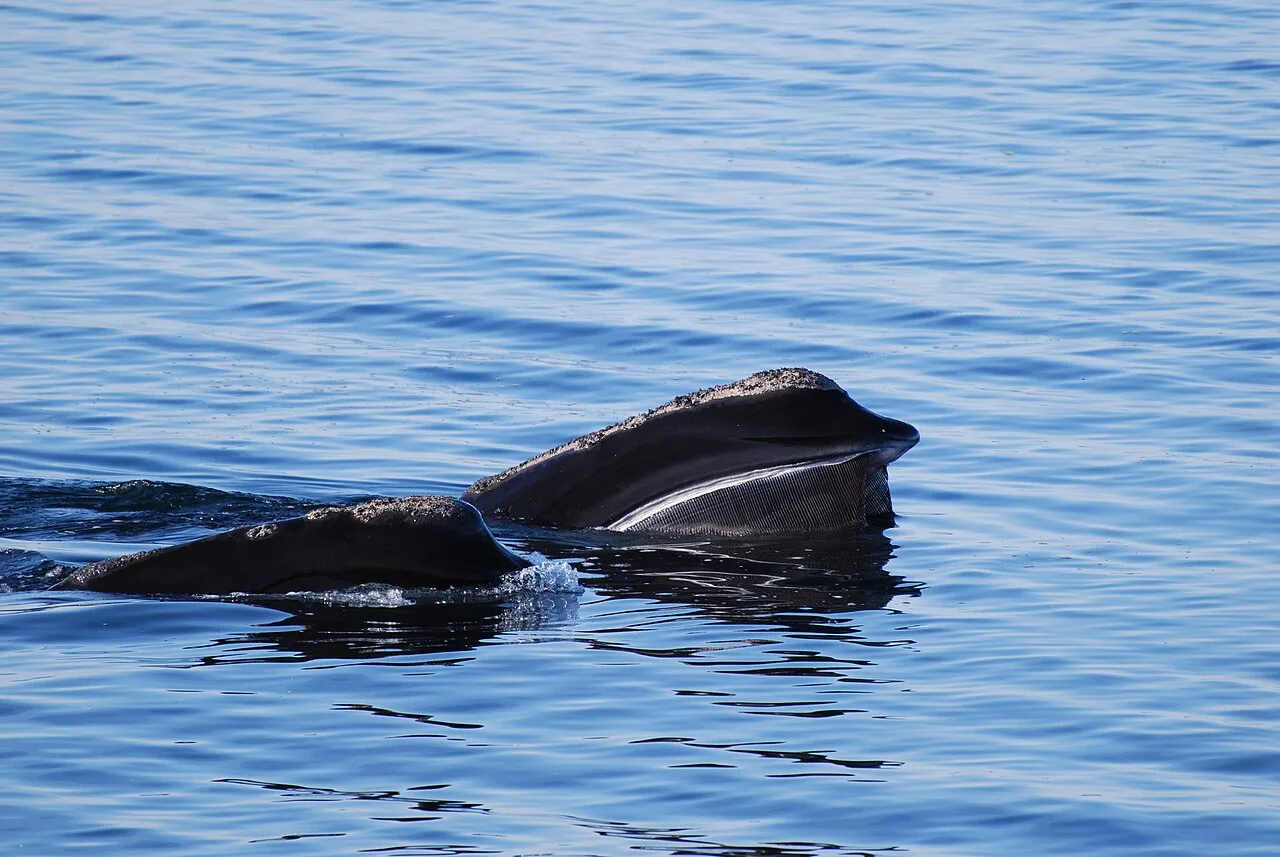
A North Atlantic right whale skim-feeding at the surface in Stellwagen Bank National Marine Sanctuary off Massachusetts, photographed in 2010 under a NOAA Fisheries research permit. Not an image of the 2025 count or of any whale named in this story. Photo: NOAA / National Marine Sanctuaries, public domain, via Wikimedia Commons.
Scientists at the New England Aquarium's Anderson Cabot Center for Ocean Life and NOAA calculate the estimate together each year. The new figure carries a margin of error of plus or minus 11 whales. The estimated number of reproductive females held steady at 73, and the total now sits about 20% below the population's recent high of 483 in 2011, according to the Aquarium.
"The population is not yet on a clear path to recovery and is incredibly vulnerable to entanglements and vessel strikes, threats we know how to reduce," said Heather Pettis, who leads the Aquarium's right whale research program and chairs the consortium.
The decline came in a strong breeding year. The 2025–2026 calving season produced 24 calves, the most since 2009, including three first-time mothers and a late calf first spotted in Canadian waters in September. Lindsey Jones, who manages the North Atlantic Right Whale Catalog, said growth "depends on every calf being able to reach maturity free from human-caused harm such as ship strikes and entanglement in fishing gear."
Deaths and injuries keep piling up. The Aquarium reports two detected deaths so far in 2026: a 4-year-old male known as Division, found off North Carolina on January 27 after a serious entanglement traced to Canadian snow crab gear, and a 3-year-old female found February 10 on a barrier island off Virginia's Eastern Shore, whose cause of death is still unknown. Researchers have also documented eight human-caused injuries this year, seven from entanglements and one from a vessel strike.
Those cases fall within a longer emergency. Since 2017, NOAA Fisheries has investigated an Unusual Mortality Event, its formal term for an unexpected die-off. The agency's table lists 177 whales: 43 deaths, 42 serious injuries and 92 cases of sublethal injury or illness, together more than 20% of the population. NOAA adds that research suggests only about one in three right whale deaths is ever documented.
The Aquarium also pointed to policy changes. On September 1, the U.S. House passed H.R. 9436, the Northeast Lobsterman Protection Act of 2026. The bill would change "2028" to "2035" in a provision of the Consolidated Appropriations Act, 2023 that sets how long current right whale regulations remain in effect; the Aquarium describes it as extending a pause on additional whale protections. It was referred to the Senate Commerce Committee on September 14. Separately, NOAA withdrew a proposed update to its vessel speed rule in January 2025, which the Aquarium called "a serious setback" at the time.
Beyond the Headlines
Why winter matters on the East Coast
Right whales feed off New England and Canada for much of the year, then many travel south in winter to give birth in shallow coastal waters off Georgia and Florida. That route crosses some of the busiest port entrances in the country. It is a very different picture from another federally protected Atlantic species: Texas just counted a record 697 Kemp's ridley sea turtle nests after decades of hands-on recovery work.
Speed limits for large ships are already in force for the season. Under NOAA's 2008 rule, most vessels 65 feet or longer must travel at 10 knots or less in Seasonal Management Areas. Along the migratory route, those limits apply from November 1 to April 30 in Block Island Sound, near major port entrances from New York to North Carolina, including the mouth of Delaware Bay, where researchers have also raised questions about the collection of sand tiger sharks, and in a coastal band from Wilmington, North Carolina, to Brunswick, Georgia. Off southern Georgia and northeast Florida, the calving-ground limit runs from November 15 to April 15. NOAA asks smaller boats to slow down in these areas too. As of November 17, it also listed two voluntary Right Whale Slow Zones, south of New York and in Cape Cod Bay, through November 29.
What boaters and beachgoers can do
Federal rules prohibit approaching within 500 yards of a right whale, about five football fields. That applies to boats, kayaks, paddleboards, jet skis and drones. If you find yourself closer, NOAA says to slow down, shift to neutral, and then move away at a slow, safe speed. Right whales have no dorsal fin and often rest just below the surface, so look for a broad dark back, white patches on the head and a V-shaped blow.
Report sightings right away: (866) 755-6622 from Maine to Virginia, or (877) WHALE-HELP, (877) 942-5343, from North Carolina to Florida. The Coast Guard on VHF channel 16 and the free Whale Alert app also take reports, and the app flags active Slow Zones. Never try to free an entangled whale yourself; trained teams handle that.
The consortium plans to publish its full annual report on the species, with recommendations, in early 2027.
Sources & further reading
- New England Aquarium — North Atlantic Right Whale Population Continues to Struggle in Latest Update (November 16, 2026): the 2025 estimate, calving season, 2026 deaths and injuries.
- NOAA Fisheries — 2017–2026 North Atlantic Right Whale Unusual Mortality Event: case counts and reporting hotlines.
- NOAA Fisheries — Reducing Vessel Strikes to North Atlantic Right Whales: Seasonal Management Areas and current Slow Zones.
- NOAA Fisheries — How You Can Help North Atlantic Right Whales: the 500-yard rule, identification tips and sighting hotlines.
- U.S. Government Publishing Office — H.R. 9436, Northeast Lobsterman Protection Act of 2026, as passed by the House and referred to the Senate.
- New England Aquarium — Statement on NOAA's withdrawal of the proposed vessel speed rule update (January 15, 2025).
- Mongabay — Drowned in Fishing Gear, Struck by Boats, North Atlantic Right Whales in Serious Trouble (November 16, 2026): independent report on the census and threats.